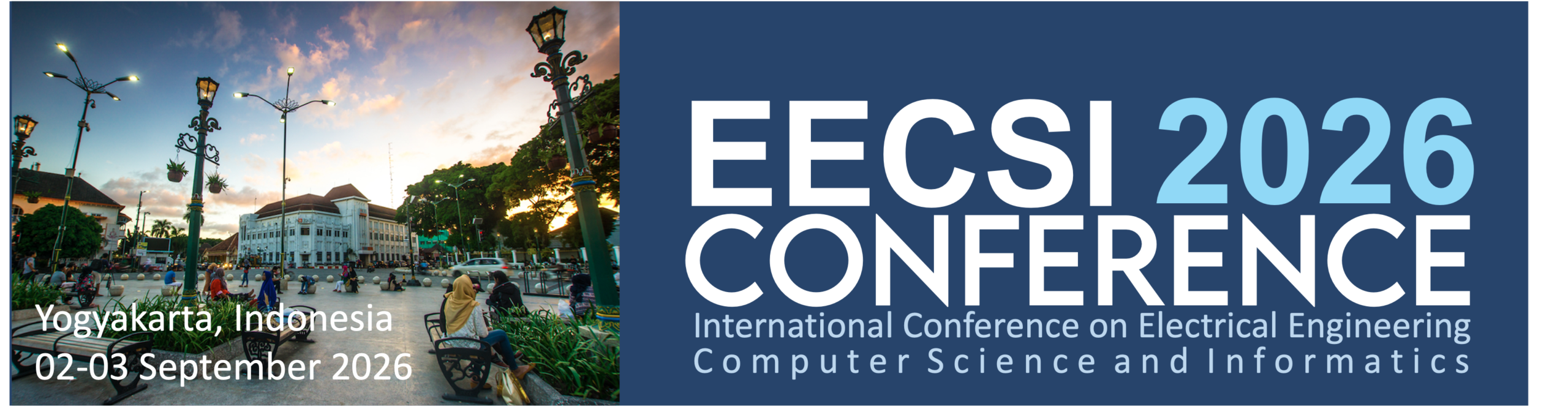
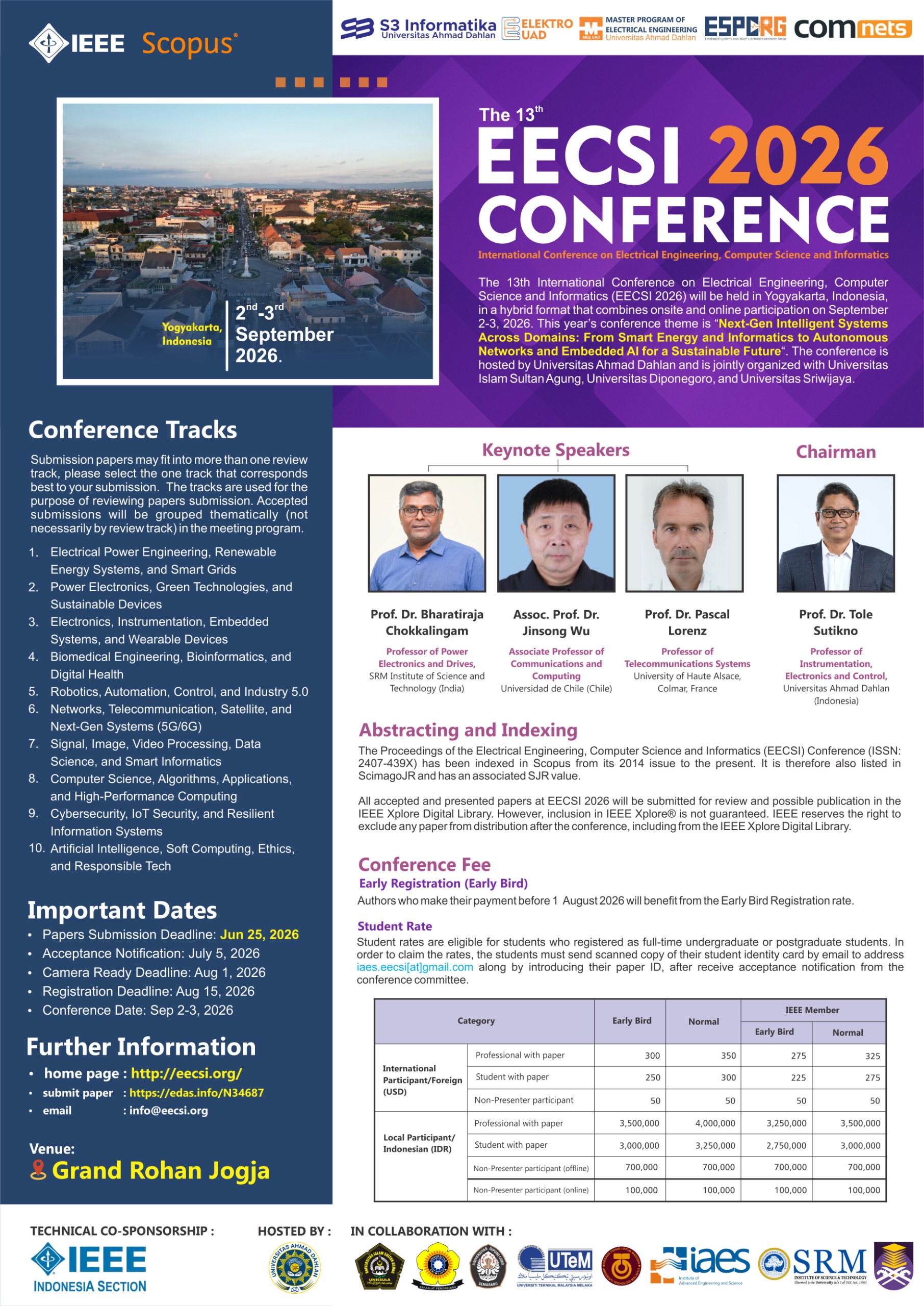
The 13th International Conference on Electrical Engineering, Computer Science and Informatics (EECSI 2026) will be held in Yogyakarta, Indonesia, on September 2–3, 2026, in a hybrid format that combines onsite and online participation. This year’s conference carries the theme “Next-Gen Intelligent Systems Across Domains: From Smart Energy and Informatics to Autonomous Networks and Embedded AI for a Sustainable Future”, reflecting the growing importance of sustainable innovation and intelligent technologies in shaping our global future.
EECSI has established itself as a leading international forum for knowledge exchange, bringing together researchers, academicians, scientists, students, engineers, and industry practitioners from across the world. The conference provides a vibrant platform to present cutting-edge research findings, share innovative developments, and explore applications across diverse domains of electrical engineering, computer science, and informatics.
The scope of EECSI 2026 spans a wide range of topics, including renewable energy systems, power electronics, electronics and instrumentation, robotics and automation, IoT, telecommunication networks, cybersecurity, blockchain, artificial intelligence, data science, and smart informatics. By integrating these fields, the conference emphasizes how next-generation intelligent systems can drive sustainable progress, enhance industrial transformation, and address pressing societal challenges.
Hosted by Universitas Ahmad Dahlan (UAD) and jointly organized with Universitas Islam Sultan Agung, Universitas Diponegoro, and Universitas Sriwijaya, EECSI 2026 continues its tradition of strong academic collaboration and international visibility. Accepted papers will be submitted to IEEE Xplore and indexed in Scopus and Scimago Journal Rank (SJR), ensuring global recognition and impact for authors.
We warmly invite you to join EECSI 2026 in Yogyakarta—an inspiring city known for its rich cultural heritage and academic vibrancy. Whether participating onsite or online, you will experience a dynamic environment for networking, collaboration, and advancing research that bridges theory, practice, and societal needs.